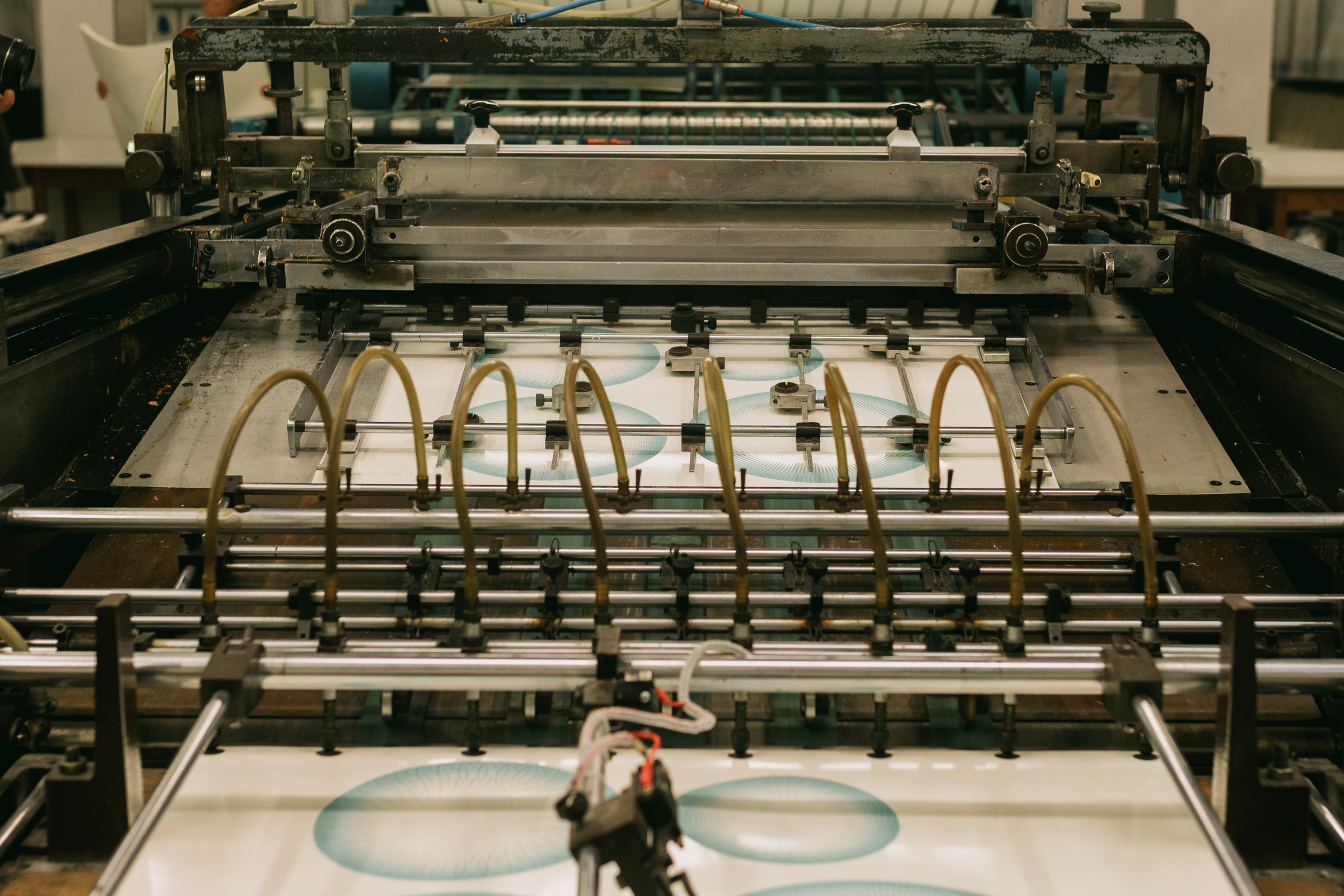
In a world drowning in digital noise, something unexpected is happening. The physical pieces you can hold, fold, and share are cutting through in ways that screens simply cannot.
Print Isn't Dead: The Surprising Power of Physical Marketing
I was at a conference last fall. Typical tech event—thousands of attendees, hundreds of vendors, endless digital badge scanning. By the second day, I couldn't remember a single company I'd talked to.
Except one.
They handed me a card. Not a business card—more like a small broadsheet, folded origami-style into something you actually wanted to unfold. Inside: their story, told in beautiful typography on paper that felt expensive without feeling pretentious. I kept it. I still have it. I became a customer.
That's the power of physical in a digital world. Surprise. Texture. Memory.
Why Screens Have a Ceiling
Here's an uncomfortable truth: digital marketing is approaching saturation. The average person sees between 4,000 and 10,000 ads per day. Social media algorithms reward engagement over everything, which means your content competes not just with competitors but with cat videos and political outrage.
I'm not saying digital doesn't work. It does. But its effectiveness depends on volume and frequency in ways that print simply doesn't. A beautifully designed brochure that sits on someone's desk keeps working for weeks. A social media post has hours before it disappears into the scroll.
The Attention Asymmetry
Digital marketing competes for seconds of attention. Physical marketing can capture minutes. That difference changes everything about what you can communicate.
The Neuroscience of Touch
This isn't just opinion. Research backs it up. Physical materials engage different cognitive processes than screens. When you hold something, you process it more deeply. You remember it better. You assign it more value.
| Factor | Physical Materials | Digital Content |
|---|---|---|
| Processing time | 22% longer | Baseline |
| Emotional engagement | Higher limbic response | Lower activation |
| Recall after 1 week | 75% higher | Baseline |
| Perceived value | Significantly higher | Often commoditized |
The human brain evolved with physical objects. We've had screens for a few decades. We've had hands for millions of years. Touch still matters in ways that our digital habits can't erase.
Strategic Print in a Digital-First World
I'm not suggesting you abandon digital for print. That would be silly. But there's a smarter approach: using physical materials strategically at moments where they create disproportionate impact.
The moments that matter most:
- First impressions with high-value prospects
- Closing and onboarding sequences for new clients
- Retention and loyalty reinforcement for existing relationships
- Events and conferences where you're competing for attention
- Thank-you moments that deserve more than an email
The key isn't more print. It's better print, at the right moments, for the right people. Quality over volume. Impact over reach.
"In a world where everything is digital, physical becomes remarkable. Use that scarcity wisely."
Making Physical Work Harder
The best physical marketing doesn't just sit alone. It connects to your digital presence, creating a multi-channel experience that's greater than the sum of its parts.
Think about what happens after someone receives a beautifully designed piece. Where do they go next? How does the physical experience connect to the digital one? Does the brand feel the same in both places?
This is where our work on Experience Readiness becomes practical. Every touchpoint—physical and digital—tells the same story. Different instruments, same song.
The Integration Principle
Print and digital shouldn't compete—they should collaborate. Each should make the other more effective.