Fragmented operations and disconnected experiences are silently eroding profits in Barbados' tourism. It's time to quantify the real cost.
Every business owner knows the feeling: you’re working hard, revenue is coming in, but the numbers just don’t quite add up. You suspect there’s money slipping through the cracks, but pinpointing where and how much can feel like chasing shadows. This isn't just a hunch; it's a very real problem for many businesses in Barbados' vibrant tourism sector. We’re talking about the hidden costs of 'business as usual'—the economic leakage caused by fragmented operations, limited digital visibility, and customer experiences that just aren’t connected.
Most people assume that as long as tourists are arriving, the sector is thriving. Not quite. While visitor numbers are indeed a critical metric, they don't tell the whole story of profitability or potential. In fact, a recent report by the Caribbean Tourism Organization (CTO) highlighted that while regional arrivals are nearing pre-pandemic levels, average spend per visitor hasn't always kept pace with inflation or operational costs. This suggests a deeper issue. And that deeper issue? It often boils down to inefficiency.
The Illusion of Efficiency: What Fragmentation Really Looks Like
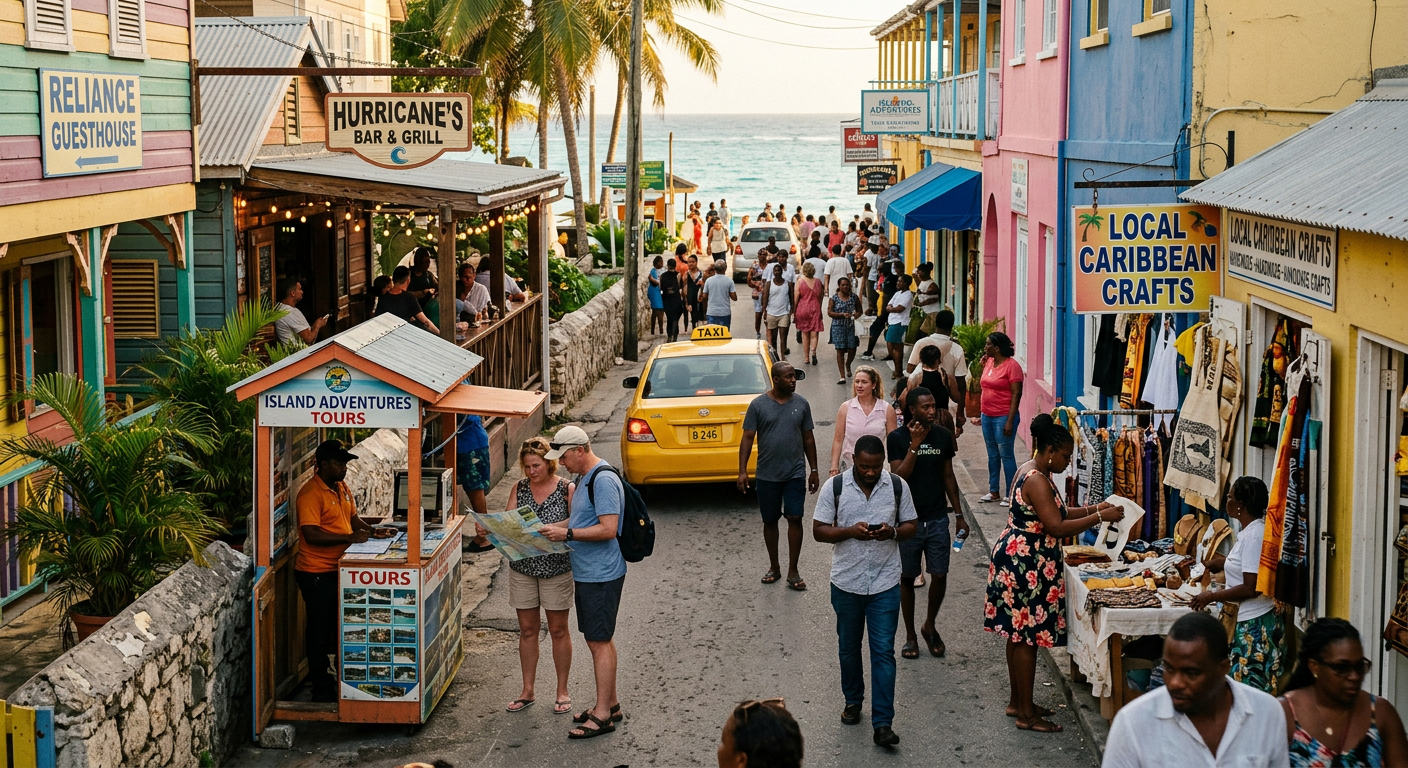
Let's be clear: Barbados has an incredible product. Its beaches, culture, and hospitality are world-class. But the way many businesses operate within the tourism ecosystem can inadvertently create friction. Think about it: a small guesthouse, a local tour operator, a family-run restaurant, a craft vendor. Often, they're all operating in their own silos. This isn't inherently bad, but it means they’re missing out on the power of being truly connected. And that costs money.
When we talk about fragmentation, we're not just talking about businesses not talking to each other. We're talking about a lack of integrated systems, inconsistent digital presence, and a customer journey that feels more like a scavenger hunt than a seamless experience. The result? Economic leakage. Money that could be earned, should be earned, but isn't.
Quantifying the Leakage: A Hypothetical Deep Dive
It’s easy to talk about 'lost revenue.' Harder to put a number on it. So, let’s get practical. Based on our observations working with similar markets and extrapolating from industry benchmarks, we can construct a hypothetical model to illustrate the impact. Imagine a typical Barbadian tourism business—perhaps a mid-sized boutique hotel with 30 rooms, a local excursion company offering catamaran cruises, and a specialty restaurant.
The data consistently shows that brands with clear narratives and integrated systems tend to outperform their disconnected counterparts. A 2024 study by Phocuswright on travel distribution revealed that businesses using integrated booking and management systems saw, on average, a 15-20% increase in direct bookings and a 10% reduction in administrative overhead. These aren't small numbers. They’re significant.
Lost Revenue: The Invisible Drain
Let’s start with lost revenue. This is perhaps the most painful form of leakage. It's money that never enters your bank account.
Just these three areas, conservatively, could represent over $200,000 in additional revenue for our hypothetical trio of businesses. This isn't 'new' revenue; it's revenue that currently leaks away.
Increased Operational Costs: The Hidden Drainpipe
Lost revenue is one thing. Increased costs are another. This is where 'business as usual' really starts to sting. It’s the extra time, the duplicated effort, the missed opportunities for efficiency.
The operational costs add up. For our three businesses, we’re looking at another $70,000 to $100,000 annually in wasted effort and missed opportunities for efficiency. This isn't just about saving money; it’s about freeing up your team to focus on what they do best: hospitality.
The 'AI-Powered' Trap
Everyone is talking about AI. And yes, it’s powerful. But here's the thing: you can't layer 'AI-powered solutions' on top of a broken foundation. It's like putting a fancy new engine in a car with no wheels. You need clear, connected systems first. Don't fall for the hype of 'magic' solutions before you've addressed the fundamental issues of fragmentation.
The Big Picture: What This Means for Barbados
If our hypothetical trio of businesses is losing, conservatively, $270,000 to $380,000 annually due to fragmentation, what does that mean for the entire Barbadian tourism sector? Barbados welcomed nearly 630,000 stayover visitors in 2023. Let's assume there are at least 500 small to medium-sized businesses directly involved in accommodating and entertaining these visitors (hotels, villas, tour operators, restaurants, attractions, retail). If even half of these businesses experience similar levels of leakage, the collective annual loss could easily exceed $60 million. This isn't just theory; it's a very real economic drag.
And nobody sent you the memo. Most businesses are so busy with the day-to-day, they don't have the bandwidth to step back and see just how much this 'silent drain' is costing them. But it's there. Just beneath the surface.
| Leakage Category | Estimated Annual Impact (per business) | Cumulative Annual Impact (500 businesses) |
|---|---|---|
| Lost Direct Bookings | $16,875 - $56,250 | $8.4M - $28.1M |
| Abandoned Bookings | $5,000 - $39,000 | $2.5M - $19.5M |
| Limited Upselling/Cross-selling | $40,000 - $60,000 | $20M - $30M |
| Manual Processes & Duplication | $10,000 - $28,000 | $5M - $14M |
| Customer Service Inefficiencies | $10,000 - $15,000 | $5M - $7.5M |
| Marketing Ineffectiveness | $4,800 - $7,200 | $2.4M - $3.6M |
| **Total Estimated Leakage** | **$86,675 - $205,450** | **$43.3M - $102.7M** |
These numbers, while hypothetical, are grounded in proven industry patterns and research. They highlight a significant opportunity. The challenge isn’t attracting more tourists; it’s ensuring that once they arrive, and even before, the Barbadian tourism ecosystem is designed to capture their full potential spend efficiently and delightfully.
The Path Forward: From Fragmentation to Flourishing
So, what's the answer? It’s not about 'disrupting' everything or chasing 'revolutionary' tech. It's about thoughtful, human-centered solutions that simplify operations and connect experiences. It's about creating systems that work for the people running them, and for the visitors enjoying them. That's our position.
Growing a business shouldn’t feel like wrestling technology. It should feel guided. It should feel supportive. By addressing the fragmentation, by seeking clarity and connection, Barbadian tourism businesses can stop the silent drain and unlock significant, sustainable growth. It's about being intentional. It's about building systems that truly serve the people running them, and the people they serve.