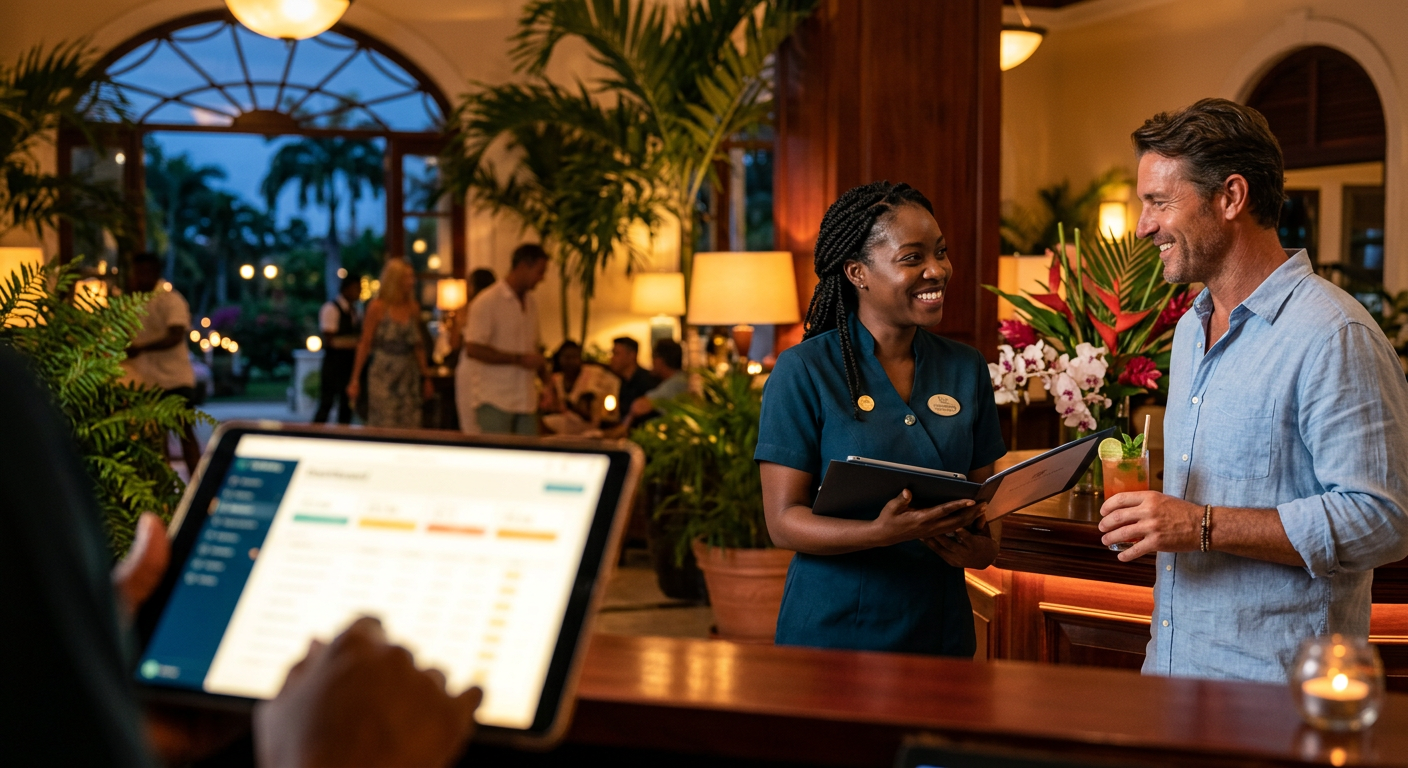
Slapping a guest's first name on an email isn't personalization. Here is how modern Barbados hotels are using behavioral data to drive real bookings.
Most personalization in the travel industry is a lie. Seriously.
You know the exact drill. You book a flight to Bridgetown. Three days later, your inbox pings. "Hi [First Name], ready for your Barbados getaway?" The email features a lovely, highly saturated stock photo of Carlisle Bay. It suggests the exact same catamaran cruise, the exact same Mount Gay rum tasting, and the exact same Oistins fish fry that it suggests to literally every single person on their mailing list.
That isn't personalization. That is a mail merge. And modern travelers see right through it.
Here's the thing: we have spent the last few years obsessing over data collection. Hotels in Barbados—from intimate boutique spots in Bathsheba to massive luxury resorts on the West Coast—have gathered mountains of customer information. But they are using it to do the exact same superficial marketing they did a decade ago. Just faster. And with more automation.
The game changed. And nobody sent the hospitality industry the memo.
According to a Q1 2026 report by TravelTech Insights, while 82% of hotel marketers believe they are delivering a personalized experience, only 21% of guests actually agree. That 61% gap? That is where you are losing direct bookings to massive online travel agencies. That is where you lose the rebooking. That is where the money vanishes.
The First-Name Illusion vs. Behavioral Reality
Growing a business shouldn’t feel like wrestling technology. But when you are trying to force a bloated, outdated CRM to act like a modern marketing engine, it absolutely does. We see this constantly. Properties buy expensive software suites thinking it will magically fix their occupancy rates.
It won't.
The core issue is a fundamental misunderstanding of what personalization actually means in 2026. Most hotels confuse demographic data with behavioral data. Let's break that down.
Knowing a guest is a 45-year-old from Toronto is demographic data. It is useful, sure. But it doesn't tell you why they are traveling. Knowing that this same person spent twelve minutes reading your blog post about the best surf breaks near Soup Bowl, checked your availability for November, but abandoned the booking engine right when they saw the deposit policy? That is behavioral data. That is gold.
Stop Guessing, Start Observing
Demographics tell you who someone is. Behavior tells you what they actually want. If your marketing systems only look at age and location, you are leaving your most valuable insights on the table.
When we build systems that work for our clients, we focus heavily on this distinction. You don't need to know everything about a guest. You just need clarity on what they are trying to accomplish right now.
Marketing That Actually Listens
Let's look at a practical application. Take Marcus, a composite of several boutique hotel managers we spoke with late last year. His property on the South Coast was struggling with shoulder-season bookings. They were running generic "Escape the Cold" Facebook ads in October. It was expensive. And it wasn't working.
Why? Because people traveling to Barbados in October aren't usually escaping the snow. They are looking for deals, or they are digital nomads taking advantage of the Welcome Stamp, or they are coming for specific cultural events.
Marcus's team shifted their approach. Instead of blasting the whole database, they set up a clear, intentional system. They used modern tracking tools to identify past guests who had previously booked stays longer than 14 days. They looked at users who were engaging with content about reliable island Wi-Fi and co-working spaces.
Then, they sent a highly specific offer: A "Work from Paradise" package that highlighted ergonomic desk setups in the rooms, guaranteed internet speeds, and a partnership with a local coffee shop.
The result? A 34% increase in direct bookings for October and November. No magic. No tricks. Just a thoughtful approach to data that actually served the people reading the emails.
- Superficial Personalization: "Hi Sarah, book a room in Barbados!"
- Deep Personalization: "Hey Sarah, we noticed you were looking at our two-bedroom suites. Just a heads up—our family package includes free meals for kids under 12 if you book this week."
- Superficial AI: A chatbot that just links to your FAQ page.
- Deep AI: A predictive engine that notices a flight from London is delayed by 4 hours and automatically texts the incoming guest to ask if they want a late-night room service meal waiting for them.
Fixing the Pre-Arrival Panic
Let's talk about customer service. Specifically, the anxiety gap.
The anxiety gap is that period between when a guest pays their non-refundable deposit and when they finally unlock their room door. For international travelers coming to Barbados, this gap is filled with questions. Do I need to book a taxi from Grantley Adams? Are the restaurants nearby open on Sundays? Do I need to bring my own beach towels?
This is where modern technology shines. But again, most properties get it wrong. They install a cheap chatbot on their website and call it a day. Have you ever tried to get a nuanced answer from a bad hotel chatbot? It is infuriating. It creates more stress, not less.
"Technology should never be a wall between you and your customer. It should be a bridge. If your AI makes it harder for a guest to talk to a human when they really need one, you are doing it wrong."
A human-centered approach uses AI as a supportive tool for your staff, not a replacement for them.
In our work with hospitality brands, we've observed that the most successful properties use AI to handle the predictable, repetitive questions instantly, while smoothly handing off complex issues to real people. A guest texts the hotel WhatsApp number asking about airport transfers. The system instantly replies with the standard rates and a booking link. But if the guest replies, "I have a custom surfboard bag that is 8 feet long, will it fit?"—the system flags it, stops automating, and alerts the front desk manager to step in.
It simplifies the workload for your staff. It gives the guest immediate clarity. Everyone wins.
The Invisible Experience: Operations
We cannot talk about the modern traveler without talking about what happens behind the scenes. The best guest experiences are the ones where the mechanics are completely invisible.
Think about housekeeping. Traditionally, rooms are cleaned in a linear order, or based on when guests happen to check out. It is chaotic. Front desk staff are constantly calling housekeeping on radios to see if Room 304 is ready because the guests are sitting in the lobby looking tired.
Now, imagine applying a practical, connected system.
Using predictive models, the hotel knows that guests arriving on the British Airways flight usually show up at the property around 4:30 PM. The system automatically prioritizes cleaning those specific rooms first. When the housekeeper finishes, they tap a button on a tablet. The front desk sees it instantly. The guest receives an automated (but warm) text message saying their room is ready early.
| The Old Way | The Modern, Connected Way |
|---|---|
| Reactive staffing based on last year's calendar. | Predictive staffing based on real-time flight data and booking velocity. |
| Mass email blasts with generic discounts. | Targeted offers based on specific website behavior and cart abandonment. |
| Front desk overwhelmed by repetitive questions. | Smart routing that answers the basics and escalates the complex. |
| Technology feels like a burden to the staff. | Technology acts as a supportive partner, freeing staff to be hospitable. |
Keeping It Human-Centered
Here is the ultimate truth about travel tech in 2026. People do not travel to Barbados to interact with your software. They travel to hear the tree frogs at night. They travel to feel the sand at Miami Beach. They travel for the warmth of the people.
If your technology strategy is focused on replacing human interaction, you will lose. Full stop.
The goal of implementing modern marketing and operational systems isn't to remove the humans from the equation. The goal is to remove the friction. It is about building sustainable, practical workflows that handle the heavy lifting of data analysis, so your team can actually look a guest in the eye and welcome them to the island.
At CrossMedia, we believe that growing a business shouldn't cause you endless stress. You don't need to chase every new trend. You don't need a massive, complicated tech stack that requires a PhD to run. You just need clear, reliable systems that actually serve the people running them—and the guests who rely on them.
Start small. Look at your behavioral data. Fix the gaps in your pre-arrival communication. Stop sending generic mail merges.
Be intentional. Be thoughtful. The bookings will follow.
Ready to stop wrestling with your marketing tech?
If you are tired of systems that don't talk to each other and marketing efforts that fall flat, we can help. We design clear, human-centered solutions for growing businesses.